The Unspoken Vigil of a Silent Guardian
The sound of a small child losing their footing and meeting the hardwood floor is a percussion no parent ever forgets. It is a hollow, sickening thud that seems to vibrate through the very foundations of the house, followed by a vacuum of silence that lasts only a heartbeat before the first shriek of agony erupts. Lydia dropped the cast-iron skillet, the copper-scented air of the kitchen forgotten as the half-cooked omelet hissed on the burner, and she bolted toward the living room. Her husband, Julian, was already leaping up the stairs two at a time, his necktie dangling loose and his face drained of all color.
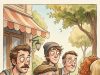
In the center of the braided rug, their two-year-old son, Silas, lay sprawled on his back, his tiny features twisted into a mask of pure betrayal and confusion. Standing over him was Cooper, their eighty-pound Golden Retriever. The dog wasn’t nudging the boy with a wet nose or offering the apologetic whimpers one might expect from a family pet. Instead, Cooper stood rigid, his chest heaving with a strange, frantic energy, letting out a sharp, rhythmic bark that sounded less like a plea for forgiveness and more like an urgent, desperate command.
“Cooper! Get back! No!” Julian roared, lunging forward to scoop Silas into his arms.
The toddler was inconsolable, clutching his bruised elbow as his face turned a sweaty, frantic shade of crimson.
“He did it again, Julian,” Lydia whispered, her hands shaking as she wiped her palms on her apron. “I saw it from the archway. Silas was just toddling toward his blocks, minding his own business, and Cooper just leveled him. He didn’t slip; he tackled him on purpose.”
Julian threw a dark, warning glare at the dog, but Cooper didn’t do what a guilty dog does. He didn’t tuck his tail or slink into the shadows of the dining room. He stood his ground, his amber eyes fixed with a terrifying intensity on the sobbing child, his snout twitching as he frantically tried to catch the air around the boy’s mouth.
The Shadows of a Changing Temperament
“That’s the third time in four days,” Julian muttered, pacing the rug while Silas’s sobs began to subside into jagged hiccups. “He’s nearly eighty pounds of solid muscle, Lydia. If he hits him the wrong way, he’s going to do serious damage. This isn’t the dog we raised.”
“It’s like he’s possessed by some kind of jealous streak,” Lydia replied, her voice thick with a mixture of grief and growing resentment. “Ever since Silas started walking on his own, Cooper has been a different animal. He blocks the hallways. He herds the poor kid into corners. And now this—this physical aggression. It’s like he’s trying to break Silas’s spirit.”
They watched the dog with a newfound sense of alienation. Cooper had spent years as a gentle, floppy doormat of a creature, but lately, he was a vibrating coil of anxiety. He paced the perimeter of the room until his claws clicked a maddening rhythm on the wood. Most unsettling of all was his new obsession with Silas’s face. He would trap the boy against a sofa and lick his mouth with a frantic, obsessive desperation, a deluge of wet tongue that left the toddler screaming in terror and pushing away with tiny, trembling hands.
“We can’t have them in the same room anymore,” Julian decided, his jaw set in a hard, uncompromising line. “I’m not going to sit here and wait for my son to end up in the emergency room because our dog has gone off the rails.”
He gripped Cooper by the heavy nylon collar. For the first time since they had brought him home as a seven-pound ball of fluff, Cooper let out a low, vibrating growl directed at Julian. It wasn’t the snarl of a predator, but a deep, mournful protest that seemed to come from the very bottom of his lungs. He dug his paws into the carpet, resisting with every ounce of his weight, his eyes never leaving Silas. Julian had to physically haul the massive animal toward the sliding glass door, shoving him out into the humid evening air and sliding the lock into place.
Through the glass, Cooper didn’t run off to patrol the fence or find a tennis ball. He pressed his wet nose against the pane, fogging the glass with his heavy breath, staring at Silas with an intensity that made Lydia’s stomach turn.
A House Divided by an Invisible Fever
The afternoon was a slow-motion nightmare of heat and irritability. Silas was remarkably restless, a state Lydia attributed to the trauma of the fall. He clung to her legs, wept at the slightest provocation, and drank three full sippy cups of apple juice in an hour, yet he pushed his favorite grilled cheese away untouched. The mid-July humidity was stifling, the air conditioner struggling to keep up, and the atmosphere inside the house felt as fragile as spun glass.
“He’s just rattled,” Lydia told her sister over the phone, her eyes tracking Silas as he listlessly pushed a wooden train across the carpet. “Cooper has him completely on edge. I think… I think we might have to consider rehoming him. I can’t believe I’m saying that, but Silas has to come first.”
The thought felt like ash in her mouth. Cooper had been their first “child,” the one who had slept at the foot of their bed through every milestone of their early marriage. But the image of him striking Silas down was a brand on her mind that wouldn’t fade.
By ten o’clock, the exhaustion in the house was a physical weight. They decided to keep Cooper confined to the laundry room overnight to ensure Silas could sleep without fear. They tucked the toddler in early, his small body seemingly drained from the day’s stress. As Lydia and Julian sat on the sofa in the dim light of the television, the silence of the house felt unnaturally heavy.
“Maybe we should call a specialist,” Julian suggested, though the conviction in his voice was thin. “Maybe it’s some kind of resource guarding we don’t understand.”
“He isn’t guarding toys or food,” Lydia sighed, rubbing the tension from her temples. “He’s guarding Silas, but he’s doing it by hurting him. It’s like he’s trying to keep him from moving at all.”
The Howl That Pierced the Night
At roughly two in the morning, the peace was shattered. It wasn’t a bark that woke them, but a long, high-pitched howl that echoed through the vents, a sound of such pure, unadulterated anguish that it made the hair on Lydia’s arms stand up. Julian groaned, rolling over and pulling the duvet over his head.
“You have to be kidding me. Now he’s a singer?”
“Just stay in bed,” Lydia whispered, though her heart was already racing. “If we go down there now, we’re just rewarding the noise. He has to learn he can’t dictate the house.”
The howling ceased after a few agonizing minutes, replaced by a rhythmic, heavy thudding sound. Thump. Thump. Thump.
“He’s throwing himself against the door,” Julian said, sitting upright in the dark, his voice sharp with irritation. “He’s going to tear the frame right out of the wall.”
“I’ll go,” Lydia said, swinging her legs over the side of the bed. She was thirsty anyway, her throat parched from the dry air of the bedroom.
She descended the stairs, the frantic banging growing louder with every step. It sounded desperate, a frantic scratching and thumping that suggested a dog in the throes of a panic attack. She opened the laundry room door, her mouth open to deliver a sharp scold, but Cooper didn’t give her the chance. He surged past her, a blur of golden fur that nearly sent her reeling into the dryer.
“Cooper! Get back here!” she hissed, her voice a sharp stage-whisper.
The dog didn’t head for the kitchen or the back door. He scrambled up the stairs, his claws skidding on the oak treads in his haste, slipping and recovering with a frantic scratching. A cold prickle of unease traveled up Lydia’s spine. She followed him, her pace quickening as she reached the landing. Cooper had already reached Silas’s room, the door creaking open under the weight of his frantic shove.
The Cold Sweat of a Silent Crisis
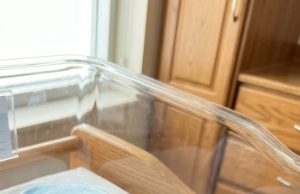
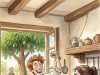
When Lydia stepped into the nursery, the scene made her blood run cold. Silas was tangled in his light cotton blanket, his head lulled to one side. Cooper was standing on his hind legs, his front paws hooked over the rail of the crib. He was whimpering, a high, thin sound of distress, and he was nudging Silas’s shoulder with a forceful, desperate shove of his nose.
“Get down right now!” Lydia commanded, rushing to the crib and grabbing Cooper’s collar. “You’re going to wake him up! Why won’t you just leave him alone?”
She hauled the massive dog back, but Cooper fought her with a strength she had never encountered. In the pale moonlight filtering through the slats of the blinds, she saw his eyes—they were wide, the whites showing in a frantic “whale-eye” stare. He barked once, a deafening explosion of sound right in her face, and then lunged back toward Silas, licking the boy’s face with a wild, uncontrollable fervor.
Julian appeared in the doorway, wild-eyed and holding a heavy flashlight. “What is he doing? Is he hurting him?”
“He’s attacking him in the crib!” Lydia cried, struggling to hold the thrashing dog. “Help me get him out of here!”
Julian dropped the flashlight and lunged. Together, they managed to wrestle the dog out of the room, though Cooper fought them like a wild animal, snapping at the air and letting out a distorted, heart-wrenching wail. They managed to shove him into the hallway and slam the bedroom door shut. Julian leaned his back against the wood, gasping for air, as Cooper began to franticly claw at the other side of the door.
“That is the end,” Julian panted, wiping sweat from his brow. “I don’t care what time it is. He’s going to the shelter tomorrow morning. He’s completely lost his mind.”
Lydia leaned against the wall, her chest heaving. “At least Silas is a heavy sleeper. He didn’t even stir with all that screaming.”
She turned back to the crib to straighten the toddler’s blankets. Silas was lying on his back, one arm flung out over his head. His pajamas were dark, soaked through with moisture.
“Good heavens, it’s like a sauna in here,” Lydia whispered, reaching out to brush a stray lock of hair from Silas’s forehead.
Her hand stopped mid-air. Her skin recoiled. Silas’s forehead wasn’t hot. It was cold. Not just cool, but a clammy, unnatural icy dampness that felt like stone. And yet, the room was easily seventy-five degrees.
“Silas?” she whispered.
He didn’t move. Usually, the slightest touch would cause him to sigh or curl into a ball. He remained perfectly, terrifyingly still—a weight of lead on the mattress.
“Silas! Baby, wake up!” Her voice rose into a shriek. She shook his shoulder. His head loped to the side, his jaw slack and his eyes remaining half-closed and glazed. “Julian!” she choked out. “Julian, something’s wrong! He won’t wake up!”
The Mercy of a Primal Instinct
The next few minutes were a blur of adrenaline-soaked terror. Julian was on the floor, his voice cracking as he followed the 911 operator’s instructions for chest compressions. Lydia was a ghost, standing in the center of the room as the sirens began to wail in the distance, their red and blue lights dancing across the nursery walls. Through the entire ordeal, the scratching at the door never stopped. Cooper was trying to get back in.
When the paramedics burst through the front door, a senior medic named Sarah Reynolds took over the scene with a grim, practiced efficiency. She checked Silas’s vitals, her eyes narrowing as she felt his skin. She leaned down close to the toddler’s face, sniffing the air near his mouth. She paused, her expression shifting from concern to a sharp, clinical focus.
“Has he been sick today? Did he have anything unusual to drink?”
“He was just thirsty,” Lydia sobbed. “He drank a lot of juice. We thought it was the heat.”
Sarah pricked Silas’s tiny heel with a lancet. A small device chirped. She looked at the reading and her eyes widened behind her glasses.
“We have a severe hypoglycemic crisis!” she shouted to her partner. “Get the glucagon ready! His blood sugar is non-existent. He’s in a deep diabetic coma.”
“Diabetic?” Julian gasped, staring at her in total shock. “He’s two. He’s never had a problem in his life.”
“Type 1 can trigger in a heartbeat,” Sarah explained, her hands moving with lightning speed as she administered the injection. “His pancreas simply quit. His body couldn’t handle the sugar in the juice, so it tried to flush it out—that’s why he was so thirsty. Then, his levels crashed tonight. If you hadn’t found him right now… ten more minutes, and he would have slipped away in his sleep. We call it ‘Dead in Bed’ syndrome because it’s completely silent. They just don’t wake up.”
The Scent of a Life in the Balance
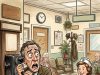
Three hours later, the pediatric intensive care unit was a sea of quiet beeps and the soft humming of machines. Silas was stable, his color returning to a healthy peach as the IV lines did the work his body could no longer manage. A specialist named Dr. Lowery sat down with Julian and Lydia in the small, sterile waiting area.
“You are incredibly fortunate,” the doctor said, glancing at the chart. “Detecting a crash like this in the middle of the night is almost impossible. There’s no coughing, no struggling. Most parents don’t realize anything is wrong until the morning, and by then, it’s far too late.”
He paused, looking at their exhausted faces. “The paramedics said you were alerted by your dog?”
Lydia’s throat tightened, a fresh wave of tears blurring her vision. She looked at Julian, the memory of the past week reassembling itself into a new, heartbreaking mosaic. The herding. The knocking Silas down when he was dizzy and unsteady. The obsessive licking of the boy’s mouth—Cooper had been smelling the sweet, chemical scent of ketones on Silas’s breath. He had been smelling the internal collapse hours before it happened.
“We thought he was being aggressive,” Julian whispered, his voice cracking with a profound, soul-deep guilt. “We thought he was jealous. Every time he tried to warn us, we punished him. We threw him out while he was trying to save our son’s life.”
“A dog’s sense of smell is thousands of times more sensitive than ours,” Dr. Lowery said gently. “They can detect the chemical shift in human sweat and breath that precedes a glycemic crash long before it manifests physically. Silas was likely getting dizzy and losing his balance, and your dog was trying to keep him low to the ground so he wouldn’t fall. He was trying to wake him up when the coma started.”
The Homecoming of a Hero
When they returned home two days later, the house felt cavernous and quiet. Silas was tucked into Julian’s arms, a glucose monitor now permanently attached to his small bicep. Mark, a neighbor who had been looking after Cooper, had let the dog back into the house, but the living room was empty.
Lydia found him in the nursery, lying on the rug beside the crib. He didn’t jump up. He didn’t wag his tail with his usual exuberance. He stayed low to the ground, his eyes wide and uncertain, waiting for the scolding he had come to expect.
Lydia fell to her knees, her tears soaking into the Golden Retriever’s thick neck. “I’m so sorry, Cooper. I’m so, so sorry, my brave boy. You were talking to us, and we weren’t listening.”
Julian sat on the floor beside them, gently placing Silas on the rug. Cooper’s tail gave a single, tentative thump against the floor. He leaned forward and, with a delicacy that made Julian’s chest ache, he softly sniffed the boy’s breath. He held his nose there for a long, quiet second, processing the scent. Then, he let out a massive, deep-bellied sigh of relief and rested his heavy chin on Silas’s lap. The vigil was over. The scent was right. The pack was whole.
That night, for the first time in Silas’s life, they didn’t close the nursery door. They moved a large, orthopedic dog bed into the corner of the room, but Cooper never used it.
When Lydia checked the baby monitor at 3:00 a.m., the grainy green light showed Silas fast asleep under his blanket. And there, pressed firmly against the bars of the crib, his nose resting in the gap between the slats just inches from the child’s face, was the silent guardian. The monitor remained quiet, but the watchman was at his post, and for the first time in a long time, the whole house finally breathed in sync.