The Geometry of an Unforeseen Inheritance
The morning had initiated its course with the exact, calculated normality that had characterized our household for years, a predictable sequence of brewing coffee and quiet domestic shifting that offered no hint of the tectonic disruption waiting at the hospital. I am thirty-five years old, an engineer whose life has been built on the unyielding principles of structural integrity and measurable data, yet the most significant revelation of my existence arrived in a form that completely bypassed the laws of probability.
If an associate had suggested to me three days prior that the arrival of my identical sons would transform our marriage into a subject of public speculation—or that the underlying biological reality would expose ancestral chapters my wife’s relatives had spent a century systematically erasing—I would have dismissed the premise as a psychological delusion.
But the moment Anna’s voice fractured the sterile quiet of the delivery room, her syllables vibrating with a frantic, guttural terror as she commanded me to avert my eyes from the bassinet, I understood that the map of our shared history had been irrevocably altered. I was about to be forced into a profound reconciliation with the mechanics of genetics, the historical choices of an American family, and the terrifying realization of just how fragile the architecture of marital trust can become when exposed to the light.
The path to that delivery room had been an agonizingly slow, ten-year march through the clinical corridors of reproductive medicine. It was an ecosystem of synthetic hormones, scheduled charts, and midnight prayers whispered into the blankets of an empty bedroom. Three successive miscarriages had nearly broken the structural marrow of our relationship, each failure etching a deeper, more thoughtful line into the contours of Anna’s face, transforming every subsequent positive test into a landscape we approached with a guarded, defensive terror. I spent those years attempting to maintain the carriage of an unshakeable anchor, offering steady, analytical reassurances while my own internal ledger was running dangerously low on hope.
There were countless nights when I would awaken at two in the morning to find the bed cold beside me, only to discover Anna sitting cross-legged on the linoleum of the kitchen floor, her hands pressed flat against the hollowness of her stomach while she whispered soft, rhythmic incantations meant only for the children we hadn’t been permitted to meet.
The Threshold of the Delivery Room
When the current pregnancy finally progressed past the treacherous markers of the first trimester, the joy we allowed ourselves to experience was heavily shaded by caution. But during the twenty-week anatomy scan, when the specialist offered a serene smile and indicated that the developmental metrics were exceptionally robust, a weight we had carried for a decade seemed to lift from our shoulders. Every subsequent milestone felt like a physical miracle—the initial, delicate flutter against my palm, the way she would balance a ceramic bowl of snacks on the summit of her belly while joking about the children’s early demands, and the late-night hours I spent reading classical prose to the curve of her stomach, imagining the tiny lives decoding the frequency of my voice from the other side of the skin.
By the time the estimated date of confinement arrived, our social circle and our relatives had transformed the event into a community vigil, the entire neighborhood seemingly rooting for our success after witnessing the long season of our losses.
Then the labor initiated, a grueling, thirty-hour marathon where the clinical monitors beeped with a frantic, metronomic urgency that tightened a knot of pure panic behind my ribs. The room was a blur of medical personnel calling out measurements and structural instructions, Anna’s cries sounding through the space like a jagged blade until a nurse suddenly stepped into my path, her palm pressing firmly against the chest of my suit jacket to halt my advance.
“Sir, the medical team requires immediate clearance to manage the stabilization protocol,” she stated with an unyielding professionalism that left no room for negotiation. “We will summon you the exact moment the room is secure.”
The heavy oak door swung shut, leaving me completely isolated in the corridor. I spent the next two hours counting the linear fractures in the floor tiles, my palms slick with a cold sweat as I struggled to prevent my thoughts from spiraling into the dark. Finally, the latch clicked open, and a secondary nurse signaled my approach. “The environment is stable now, Mr. Vance. You may enter.”
The Two Colors of the Cradle
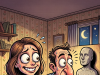
My heart hammered an erratic, uncoordinated rhythm against my ribs as I stepped across the threshold into the bright, yellow glare of the surgical lights. Anna was propped against the pillows, her skin possessing a translucent, waxy pallor that spoke of profound exhaustion, her upper body trembling as she clutched two small, linen-wrapped bundles against her chest like a shield.
“Anna?” I said, dropping my briefcase onto the floor as I rushed to the edge of the mattress. “Talk to me, honey. Is the pain management insufficient? Do I need to bring the resident back into the room?”
She didn’t offer a verbal reply; instead, her arms tightened around the bundles with a desperate, primitive intensity that made her knuckles turn white. Then, a raw, fractured sob escaped her throat, her voice dropping into a register that chilled the blood in my veins.
“Do not look at the children, Henry! Please, just turn around and walk out of the room!”
I dropped to my knees on the linoleum beside the bed, my mind racing through a dozen potential medical crises. “Anna, look at me. We have spent ten years waiting for this door to open. Whatever the circumstance is, we are going to calculate a solution together. Please, let me see our sons.”
Her hands shook with a fine, persistent tremor as she slowly peeled back the layers of the hospital blankets, exposing the small, sleeping faces to the unyielding light of the room. “Look at them, Henry,” she whispered, her voice nearly lost to the humming of the climate control.
I leaned forward, my engineering brain instantly freezing as the visual data entered my consciousness, refusing to fit into any traditional framework of probability.
The infant on the left—whom we had planned to name Joshua—possessed a pale, translucent complexion, rosy cheeks, and a fine crown of light, spun-gold hair that made him an undeniable genetic replication of my own family line. The child on the right—Raiden—carried a rich, deep mahogany skin tone, a thick thatch of dark, tightly coiled curls, and the wide, almond-shaped violet eyes that had first drawn me to Anna during our university years. Both children were anatomically perfect, their respiratory rhythms steady and peaceful, yet they looked as though they belonged to entirely different heritages.
The Architecture of Trust
Anna’s weeping intensified, the sound jagged and desperate against the sterile white walls. “There has never been anyone else but you, Henry,” she pleaded, her eyes searching mine with a terrifying vulnerability. “They are your children, I swear it on my mother’s life! I cannot explain the mechanics of this layout, but I have never compromised our vows. Please, you have to believe me.”
The visual discrepancy was staggering, a scenario that would have driven many men to immediate retreat, but as I looked at the two small faces resting against her gown, an ancient, instinctual certainty rose from the marrow of my bones. I reached out, my scarred fingers gently tracing the soft skin of Joshua’s temple before moving to cradle the dark curls of Raiden’s head. Then, I reached upward and took her hand in a firm, unyielding grip.
“Anna, look at my face,” I said, keeping my modulation perfectly level and calm. She hesitated for a heartbeat before lifting her eyes to meet mine. “I believe you without a single reservation. We are going to navigate this landscape as a single unit, and I am not moving an inch from this bed.”
A specialist from the neonatology department entered the room a few minutes later, her expression a careful mask of professional neutrality. “The attending physicians would like to request permission to conduct a series of standard genetic assays on the infants,” she explained, choosing her phrases with extreme caution. “Given the unique phenotypic variance present at birth, it is standard protocol to establish a definitive baseline.”
The subsequent twelve hours passed in a surreal, slow-motion blur of blood draws, cheek swabs, and polite, hushed conversations with specialists who spoke in the detached language of science but whose eyes held a distinct, unresolved confusion.
By the following evening, the lead geneticist returned to the room, carrying a manila folder that held the answer to our calculation. He looked deeply intrigued, the clinical detachment of his profession momentarily replaced by the excitement of a scholar witnessing a rare phenomenon.
“Henry, Anna,” he said, sitting in the chair across from the bed and opening the charts. “The preliminary DNA sequencing has cleared the registry. The probability of paternity is ninety-nine point nine percent for both infants. You are, without a single doubt, the biological father of both twins.”
Anna let out a long, ragged breath that sounded like a sob of pure, unadulterated relief, her shoulders finally dropping from the defensive posture she had maintained since the delivery. For the first time in thirty-six hours, the air inside my own lungs felt clean.
The Whispers of the Parish
But the confirmation of a lab report did not automatically sanitize the social environment outside the hospital walls. When we returned to our neighborhood, we quickly discovered that the world has a difficult time accommodating data that doesn’t fit into its neatly organized categories.
At the local market, the checkout clerks would look into the double stroller, their smiles freezing into a polite, questioning rigidity. “Twins, you say? Well, the genetic lottery certainly took a strange turn with this pair.” At the neighborhood park, a mother from the cooperative daycare leaned across the wooden bench toward Anna, her voice dropping into a conspiratorial whisper that carried across the grass. “So, which of the two boys is actually the biological product of your marriage, dear?”
Anna forced a brittle, performative laugh, her fingers tightening around her coffee cup. “Both of them belong to the ledger, Martha. Sometimes the biology just decides to display its own complexity without consulting our expectations.”
But despite her public resilience, the psychological pressure began to extract a heavy toll when the doors were locked at night. I would frequently awaken at midnight to find the nursery illuminated by the pale glow of the nightlamp, Anna sitting in the rocking chair between the two cribs, her features clouded by a profound, watchful anxiety.
“Do you truly believe your relatives accept the validity of the laboratory sequencing, Henry?” she whispered to me one evening as I wrapped my arms around her shoulders from behind. “I can hear the shift in the conversation whenever we walk into a family gathering. The silence is louder than the words.”
“The opinions of the registry are entirely irrelevant to the structure of this home, Anna,” I told her, pressing a kiss into the hair at her temple. “We know the math of our own lives.”
The Ancestral Document
The boys grew with a magnificent, chaotic velocity, turning our suburban home into a landscape of unchecked energy, scattered building blocks, and the constant, high-register music of childhood laughter. Joshua was analytical and quiet, matching my own structural focus, while Raiden was a creature of pure impulse and motion, possessing the exact, deep violet eyes that defined his mother’s family. But as the third anniversary of their birth approached, the internal atmospheric pressure within Anna seemed to reach a dangerous threshold. She became visibly anxious before church functions, and her interactions with her own mother, Susan, took on a rigid, performative quality that felt like a bridge held together by frayed cables.
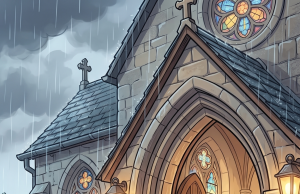
The breaking point arrived on a rainy Thursday in November. Anna sat at the kitchen island, her hands shaking as she slid a printed sheet of paper across the granite toward my position. It was a digital record of a conversation within her maternal family’s private messaging group, and the text cut through the quiet of the kitchen like a razor.
“If the parish leadership gets wind of the older records, our position in the council is entirely compromised. Do not initiate any clarity with Henry. Let the community speculate about an indiscretion if they must; a modern divorce rumor is far less damaging to our historical standing than dragging the lineage into the public square.”
I stared at the ink on the page, the structural logic of my engineering brain refusing to accept the sheer cowardice of the words. “Anna… what exactly am I reading here? Who authorized this directive?”
Her frame began to vibrate with a deep, systemic sob as she reached out to grip my sleeve. “I was never hiding an indiscretion from you, Henry. I was hiding the exact part of my family history that my mother taught me to view as a structural defect.”
Slowly, the narrative of her hidden ancestry emerged from the shadows of her family’s pride. “My maternal grandmother was a mixed-race woman born in the rural South during a season when survival required absolute discretion,” Anna explained, her voice cracking under the weight of a century of kept secrets. “She passed as white to marry into the social circle of this town, and the family code enforced a total silence regarding her identity. My mother only surrendered the truth to me in the hospital room after Raiden’s complexion became undeniable.”
She wiped a hot tear from her nose, her jaw setting into a line of sudden, defiant strength. “She begged me to let the neighborhood believe I had been unfaithful, Henry. She declared that the parish would never accept the reality of our bloodline, and that a rumor of a broken marriage was a lesser price to pay than the disruption of their social legacy. I thought I was protecting our sons by remaining silent, but all I was actually doing was renting a room for her shame.”
The Biology of the Chimerism
Then she explained the secondary breakthrough that the genetic counselor had delivered during their private consultation the previous week.
“The specialists ran a deep cellular profile on my tissue samples,” Anna said, her breathing slowing as the science offered a rational framework for her body’s choice. “They discovered that during the earliest stages of the embryonic cycle, my own twin sister’s cellular structure was absorbed into my developing tissue, a phenomenon known as tetragametic chimerism. I carry two distinct, independent sets of DNA within my own physical frame. Joshua received the standard combination of our traits, but Raiden… Raiden developed from the cellular line that carried the concentrated genetic memory of my grandmother. He is the physical manifestation of the history they tried to erase from the ledger.”
Her family, it appeared, would have preferred to sacrifice her reputation and the integrity of our marriage on the altar of public gossip rather than admit that their bloodline contained the very diversity they spent their Sundays preaching against.
I took both of her hands in mine, my fingers closing around hers with a force that was absolute. “You are never going to shelter another individual’s fear within the walls of this house, Anna. Your grandmother’s blood is an honorable line, and it is currently keeping our son alive. This family is structurally sound, exactly as it has been built.”
The following morning, I dialed the registry of her mother’s residence, my voice maintaining the calm, unyielding resonance I used when an industrial contract was breached.
“Susan,” I said, bypassing the casual pleasantries completely, “I am holding the transcript from the family log. Did you instruct your daughter to accept the stigma of a marital indiscretion to preserve your standing in the church council—yes or no?”
A long, pressurized silence came through the receiver, broken only by the distant ticking of a grandfather clock in her foyer. “You lack the historical context to judge our choices, Henry,” she whispered, her tone brittle with a defensive pride. “The social architecture of this town is exceptionally fragile.”
“The architecture of this town doesn’t concern me, Susan,” I replied, my voice remaining entirely steady. “But the architecture of my home is my responsibility. You commanded your child to carry a public humiliation so you could maintain a comfortable illusion in your parish. Until you deliver an authentic apology to Anna, and until you display the capacity to treat both of my sons as equal heirs to our legacy, your access to this family is permanently revoked.”
The Verdict at the Table
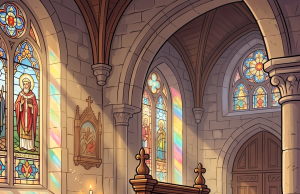
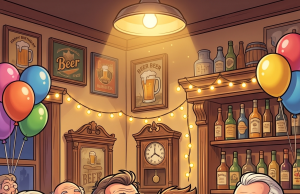
The definitive confirmation of our new boundaries occurred two weeks later during the annual holiday festival in the parish hall. We were standing near the service buffet when a prominent member of the regional committee approached our table, her eyes lingering on the contrast between the boys’ features with that familiar, patronizing curiosity.
“They are absolutely darling, Henry,” she murmured, her voice carrying a performative warmth, “but the neighborhood is still entirely bewildered by the layout. Which of the two boys is truly your son?”
I looked down at Joshua, who was carefully stacking sugar packets into a neat tower on the tablecloth, and then at Raiden, who was watching the movement with his wide violet eyes. I looked back at the woman, my posture expanding until I occupied the center of the space.
“Both of them belong to my bloodline,” I said, my voice carrying across the adjacent tables until the room became completely still. “Both are the biological products of this marriage, and both are Anna’s miracles. We are a family unit, free of secrets and open to the light. If that reality causes a disruption to your view of the world, perhaps you should select a different table for your dinner.”
The woman’s features froze into a mask of silent shock, and she retreated into the crowd without another syllable. I felt Anna’s hand slip into mine beneath the edge of the table, her fingers closing around mine with a strength that told me the old fortress of her shame had finally been dismantled.
Later that evening, after the boys had been tucked into their beds and the house had settled into the quiet of the midnight hours, Anna rested her head against my shoulder as we stood by the window.
“We are going to raise them with the full inventory of their history, Henry,” she said softly, her gaze fixed on the stars above the yard. “Every single line of it.”
I turned and pressed a kiss into the dark waves of her hair, the air inside our home finally feeling clean and light. “That is the only way a building stays standing, honey,” I told her. “We build it on the truth.”
Because the statistics of our biology are merely the numbers on a page—with approximately one in one hundred twin births displaying varying degrees of genetic divergence, and chimerism representing an even more minute percentage of human development—but the value of a family isn’t calculated by the rarity of the traits. It is calculated by the simple, unhurried courage to remain in the room together when the old illusions are torn down, proving that the real strength of a home is found in the people who choose to step out of the shadows and walk into the sun as one.