My name is Elena Crawford.
At 3:07 in the morning, my phone rang. I knew—before I even answered—that something had gone terribly wrong.
My daughter Laura’s voice came through the line, barely above a whisper. It trembled, not with pain, but with fear.
“Mom… I’m scared,” she said. “I really need you right now.”
I tried to calm her, to ask questions, but the call ended abruptly. I called back again and again. No answer.
I drove to her house without really seeing the road. I don’t remember the traffic lights or the turns—only the tightness in my chest and the growing sense that I was already too late.
When I arrived, police cars were parked outside. Their lights washed over the front of the house in slow, quiet pulses. An ambulance stood nearby. A doctor approached me gently, her expression careful, controlled.
“I’m so sorry,” she said.
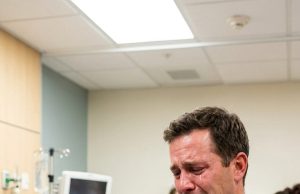
They told me Laura had passed away. They said it appeared to be an unfortunate accident that happened while she was out alone. Her husband, Daniel, sat on the steps, shaken and tearful, repeating the same explanation to anyone who would listen.
The officers accepted it. The neighbors did too.
I nodded, listened, thanked them.
But something inside me didn’t settle.
The House That Didn’t Match the Story
The next day, I returned to Laura’s home.
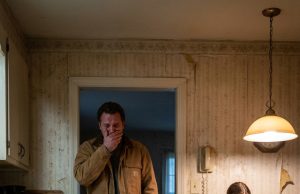
The living room felt wrong. Not chaotic—just unsettled. Furniture slightly out of place. A lamp broken near the wall. Books scattered as if they’d been brushed aside in a hurry.
Daniel followed me closely, his grief loud, restless.
“I already told the police everything,” he said, pacing. “She went out. Something happened. I don’t know what else to say.”
“I understand,” I replied calmly.
But small details began to press on me.
Daniel mentioned taking a long shower that night, yet Laura had told me just a day earlier that the water heater wasn’t working. He said they’d argued briefly over something minor, but the kitchen showed no sign of cooking, no half-finished meal.
And then there were the scratches on his arm. Long, red lines that hadn’t been there the last time I’d seen him.
“Stress,” he said quickly when he noticed me looking.
I didn’t argue. I didn’t accuse.
I simply observed.

What Laura Left Behind
Before leaving, a nurse quietly handed me Laura’s phone. The screen was cracked, the casing damaged.
“She asked that it stay with family,” the nurse said softly.
Daniel noticed it immediately. His expression changed—not dramatically, just enough. A flicker of tension he couldn’t hide.
That night, alone, I charged the phone.
Laura had always been careful. Organized. Prepared. As I scrolled, I found voice notes—automatically saved, backed up without her ever needing to think about it.
One file stood out. Recorded just minutes before the call I received.
I hesitated before pressing play.
Laura’s voice was unsteady, frightened—but clear.
“Mom… I don’t feel safe,” she said. “We argued, and he wouldn’t calm down. I’m scared something’s going to happen.”
There was no shouting. No chaos.
Just fear.
And then the recording ended.
Quiet Answers, Careful Steps
I didn’t confront Daniel. I didn’t show him the phone.
Instead, I contacted Inspector Harris, an officer who had listened to me carefully when others had spoken in conclusions. I didn’t accuse. I simply shared what I had found and the inconsistencies that troubled me.
The investigation was reopened—not loudly, not dramatically—but thoroughly.
Details that once seemed insignificant began to align. Timelines were reviewed. Statements were reexamined. Expert opinions questioned the initial assumptions.
Daniel’s version of events shifted slightly each time he was asked to repeat it.
No single detail proved anything on its own.
But together, they told a story that no longer fit the original explanation.
The Truth, Carefully Spoken
At the hearing, there were no raised voices. No accusations shouted across the room.
Just facts.
The recording.
The timeline.
The contradictions.
The expert assessments.
Daniel listened, silent now. The confidence he once displayed was gone, replaced by a tired stillness.
The ruling came quietly.
Responsibility was established—not through spectacle, but through truth.
Afterward
Justice did not bring my daughter back.
But it protected her truth.
Months later, I donated Laura’s phone for training purposes—to help investigators recognize subtle warning signs that are often overlooked.
I began speaking in small community rooms, not as an authority, but as a mother.
I talk about listening.
About trusting that quiet voice when something doesn’t feel right.
About how truth doesn’t always arrive screaming—sometimes it whispers.
Laura didn’t call me to say goodbye.
She called because she trusted me to listen.
And I did.