The Weight of a Single Jug
The fluorescent lights of the market hummed with a low, predatory vibration that seemed to burrow directly into the base of my skull. It was nearly midnight, and I was twelve hours into a grueling double shift, my back a landscape of knots and my feet feeling like they had been tenderized by a hammer. I am forty-one years old, but in the sterile glare of the checkout lane, looking down at the endless conveyor belt of frozen dinners and bottled water, I felt eighty. My life for the past year had narrowed into a suffocating cycle of survival: waking up, checking the mounting pile of medical bills on the kitchen table, and then heading to work to earn just enough to keep my younger sister, Elise, from losing her place in the treatment program that kept her breathing.
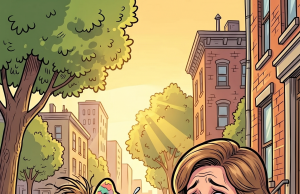
Elise was sick, the kind of sickness that was as expensive as it was persistent, and since our parents passed away three years ago, the burden of her survival rested entirely on my shoulders. I was her only safety net, her only advocate, and her only source of hope, yet every morning when I checked my bank balance, the numbers were a silent accusation of my inadequacy. I was tired, fueled by cold coffee and the kind of bone-deep anxiety that makes your hands shake when you reach for a grocery bag. That was the state I was in when a small girl, perhaps no older than eight, stepped into my lane holding a single gallon of milk.
She was a slight thing, her frame swallowed by a hand-me-down sweater that was beginning to unravel at the sleeves. Her face carried that peculiar, heartbreaking gravity common to children who have been forced to understand the value of a dollar far too early. She didn’t look at the candy bars near the register; she looked only at me, her eyes wide and unnervingly steady. She clutched the jug to her chest like a shield and whispered the question I had spent my entire career dreading. “Please, ma’am… could I possibly pay for this tomorrow morning?”
The Stranger in the Shadows
I felt a sharp, familiar pang in my chest because I knew the script for this interaction by heart, and the final line was always “no.” Store policy was a cold, unyielding wall, and my manager was already watching the clock for our nightly reconciliation. “Honey, I’m so sorry, but I can’t do that,” I said, my voice cracking slightly with a weariness I couldn’t hide. “The system won’t let me process it without the money.”
The girl’s lower lip didn’t tremble; she simply tightened her grip on the plastic handle until her knuckles turned a ghostly white. “My little brother is crying,” she said, her voice dropping to a conspiratorial hush. “He’s got a really bad fever, and my mom, Catherine, said she doesn’t get her check until tomorrow afternoon. I’ll come right back here after school, I promise.”
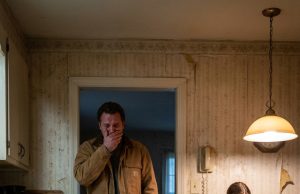
As she spoke, I became aware of the man standing directly behind her in line. He was a jarring contrast to the rest of our neighborhood—clad in a tailored wool coat that cost more than my car, wearing an understated but expensive watch, and sporting leather shoes that had never known the indignity of a cracked sidewalk. He wasn’t checking his phone or huffing with impatience like the other customers. He was staring at the back of the little girl’s head, his expression shifted into something raw and unreadable, as if he were witnessing a ghost.
I looked at the girl, then at the man, and then at the manager standing by the far doors. A sudden, defiant impulse took hold of me—a refusal to let the world be this small for one more night. I signaled my manager, holding up a finger to request a brief pause. “Can you give me thirty seconds to step away?” I called out. He nodded, his eyes lingering on the child.
I hurried into the aisles, my movements frantic as I grabbed a carton of eggs, two cans of chicken soup, a bunch of bananas, a box of crackers, and a bottle of children’s ibuprofen. I threw them on the belt, scanned them with a shaking hand, and swiped my own nearly empty debit card. I bagged the items quickly and handed them to the girl. “Go home, sweetheart,” I whispered, pressing the bags into her hands. “Take care of your brother.” She looked at me for a long second, her eyes swimming with sudden tears, before she turned and sprinted out into the dark.
The Man in the Tailored Coat
The man in the expensive coat stepped forward next. He didn’t have a cart full of groceries; he simply placed a single pack of peppermint gum on the conveyor belt. His hands were trembling, and he looked like a man who had forgotten how to breathe. “Is this all for you today?” I asked, trying to return to my professional mask. He blinked, as if waking from a deep trance, and simply nodded. He paid with a crisp twenty-dollar bill, didn’t wait for the change, and walked out the door with a determined, singular focus—following the direction the little girl had gone.
I felt a flare of protective alarm, but the line behind him was growing, and the hum of the market demanded my attention. It wasn’t until after midnight that I finally made it home to our cramped apartment. I checked Elise’s vitals, made sure her oxygen was steady, and sat by her bed while she offered her nightly apology for being a “drain” on my life. I always laughed it off, telling her she was the most valuable thing I owned, but after she fell asleep, I lay in the dark and couldn’t stop seeing the girl with the milk. I couldn’t stop hearing the name she had mentioned. Catherine.
The following afternoon, as I exited the employee entrance, I found the man from the night before waiting near the bike racks. He looked devastated—his expensive coat was rumpled, his face was unshaven, and his eyes were bloodshot. He didn’t approach me aggressively; he stayed at a respectful distance, looking like a man who was afraid of his own voice. “Please, don’t walk away,” he said, his tone desperate. “I just need to explain what happened.”
I crossed my arms, the cold wind biting through my thin jacket. “You followed a child home last night. You have thirty seconds before I call the cops.”
He swallowed hard, his gaze dropping to the pavement. “My name is Julian. Last night, that little girl mentioned her mother’s name. Catherine. I spent ten years trying to convince myself I had forgotten that name, but the moment I heard it, I knew.”
The Ghost of a Decision
I remained silent, watching him with a guarded skepticism. He continued, the words tumbling out in a rush. “Catherine was the woman I was supposed to marry. We were young, we were happy, and we had an entire life mapped out. But my family… they had different expectations. They wanted a legacy, a strategic alliance, someone from their own world. I was twenty-one, I was a coward, and I let them talk me into leaving her. I walked away and never looked back because I didn’t think I could survive the guilt if I did.”
He looked up then, his eyes searching mine. “Then I saw that girl in your line. She looks exactly like my sister did at that age. I followed her because I had to know. I knocked on the door, and Catherine opened it. She looked at me like I was a nightmare come to life. And then I saw the boy on the couch. He has my father’s eyes.”
My pulse thudded in my throat. “You’re telling me those twins are yours.”
“She never told me she was pregnant,” he whispered, his voice thick with shame. “She raised them alone for eight years in that house while I was living a life of luxury. Last night, while I was standing there in my three-hundred-dollar shoes, my daughter was begging for a gallon of milk. She told her mother that ‘the lady at the store’ saved them. Catherine won’t even look at me, but she trusts you. I don’t know how to fix this, and I’m terrified they’re going to die in that house from this fever.”
I looked at my phone—a text from Elise’s clinic warned me of an insurance discrepancy that would likely delay her next round of medication. I looked back at Julian, a man who had everything and yet possessed nothing. “I have twenty minutes,” I said. “Lead the way.”
The House of Quiet Desperation
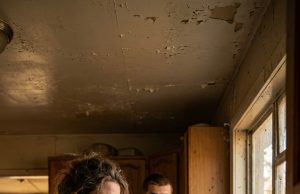
The residence was on the east side of the tracks, in a neighborhood where the houses seemed to huddle together for warmth, their paint peeling like sunburnt skin. It was a place defined by the thin margin between a bad week and an eviction. Catherine’s house was small, the front step cracked and the porch light flickering, but as Julian led me inside, I was struck by the cleanliness of the interior. The air smelled of lemon polish and sickness. It was the home of a woman who was fighting a war on every front and refusing to surrender her dignity.
The little girl—Lucy—saw me first and offered a small, tentative smile. “It’s the nice store lady,” she whispered. Her brother, Ben, was curled into a ball on the sofa, his face a bright, alarming shade of crimson. Catherine was slumped in a nearby armchair, her breathing labored and shallow. When she saw Julian standing behind me, her entire posture turned to iron.
“I told you to stay away,” she rasped, her voice a jagged edge. “You don’t get to come in here and play the savior after a decade of silence.”
Julian took a step forward, his hands open in a gesture of supplication. “Catherine, please. I’m not here for me. I’m here because you’re sick and the kids are sick. I brought someone you can trust.”
I stepped into the gap between them, the familiar role of caretaker taking over. “Catherine, let’s worry about the past later. Right now, your son sounds like he’s got fluid in his lungs, and you don’t look much better. Let me help.”
The Cost of a Return
Julian had already arranged for a private physician, a man who arrived with a leather bag and a professional, unbothered air that spoke of high-priced retainers. Within the hour, the verdict was in: the children had a severe strain of the flu, but Catherine had developed pneumonia. She was dangerously close to respiratory failure. She tried to fight the suggestion of a hospital, her eyes darting to the children with a primal fear of being separated, but Julian was firm.
“I am paying for everything,” Julian said, his voice quiet but possessing a new, grounded authority. “You are going to the hospital, and I am staying here with the kids. I won’t let anything happen to them. I promise.”
Catherine looked at him with a mixture of hatred and exhaustion. “Your promises aren’t worth the paper they’re written on, Julian.”
“I know,” he replied. “But the store lady is going to stay too. Won’t you?” He looked at me, a silent plea in his eyes.
I thought of Elise at home, but I knew she was stable for the night. I thought of the little girl who wanted to pay me back tomorrow. “I’ll stay,” I said to Catherine. “I’ll make sure they eat and take their medicine. You go get better.”
Over the next week, the dynamic shifted in ways none of us could have predicted. Julian stayed in that neighborhood, trading his tailored coats for sweaters and learning the messy, unglamorous reality of fatherhood. He brought far too many toys, he burnt the toast, and he looked utterly bewildered when Lucy refused to hold his hand. I watched him from the kitchen, seeing the slow, painful process of a man realizing that money could buy medicine, but it couldn’t buy a history.
One evening, after Catherine had been discharged and was resting in her own bed, I found Julian sitting on the back porch, staring out at the darkened alley. “She told me today that she spent eight years hating me so she wouldn’t have to miss me,” he said, his voice nearly lost in the wind. “I don’t think I can ever make up for that.”
“You can’t,” I said bluntly. “You can only be there for tomorrow. That’s all any of us have.”
The Unexpected Lifeline
As the crisis in Catherine’s house began to stabilize, the one in my own was reaching a breaking point. I was sitting in the hospital lobby after a late-night visit with Catherine when my phone buzzed. It was a final notice from the specialty pharmacy. If I didn’t pay the outstanding balance by Friday, Elise’s shipment would be canceled. I buried my face in my hands, the weight of the last year finally crushing the air out of my chest.
Julian walked out of Catherine’s room and found me there. He didn’t ask what was wrong; he had seen me taking the frantic calls in the hallway for days. “How much do you need?” he asked.
I looked up at him, my pride a cold, hard knot in my stomach. “I told you before, I’m not a charity case, Julian. I’m doing my job.”
“This isn’t charity,” he said, sitting down in the chair beside me. “You bought my children food when they were starving and I was a stranger to them. You gave Catherine a reason to trust the world again when I had given her every reason to fear it. You didn’t just buy milk that night; you bought me a second chance at being a human being. Let me do this for your sister. Not because I’m rich, but because I’m in your debt.”
I wanted to say no. I wanted to remain the strong, independent anchor that Elise needed. But then I thought of her face when she struggled to walk to the kitchen, and I thought of the empty bottle of medicine in our medicine cabinet. I looked at Julian—a man who was finally learning the difference between price and value.
“I’ll be at the store tomorrow,” I said, my voice steady. “You can meet me after my shift.”
The next day, as I stood under the humming fluorescent lights of the market, I watched the clock tick down the final seconds of my double shift. When I walked out the door, Julian was there, waiting by his car. He didn’t look like the polished executive anymore; he looked like a man who had spent the day cleaning a house and reading stories to two children who were finally starting to call him by his name. For the first time in a long, dark year, as we drove toward the pharmacy, I allowed myself to believe that the milk I had bought for a stranger might have been the best investment I ever made. I allowed myself to breathe.