I was merely a struggling waitress when a billionaire CEO walked into my diner. As he scribbled on a document, my eyes froze on the page. “Excuse me… that’s my dad’s signature,” I murmured. He glanced down, then looked up at me—and the glass in his hand slipped, falling to the floor in sh0ck.
The Signature on the Check
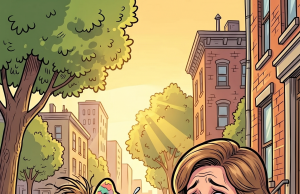
I was cleaning tables at Maple’s Diner when the fanciest car I’d ever seen pulled onto our gravel lot. Waitressing to fund my community college tuition wasn’t glamorous, but it paid the bills. That morning, I never imagined a billionaire CEO would step into our tiny diner, take a seat in my section, and sign a check with a signature I recognized instantly from an old, faded photo—a signature that belonged to the father my mother had always claimed had died before I was born.
Chapter 1: An Ordinary Tuesday
At twenty-four, I believed my life was already mapped out. It wasn’t ambitious or glamorous, but it felt steady and achievable. I worked early mornings at Maple’s Diner in Milbrook, a quiet upstate New York town where days blurred together and surprises were rare. The wages weren’t great, but the tips covered my classes at the nearby community college, where I was majoring in business administration. My goals were simple: earn my degree, save enough to transfer to a university, and someday open a business of my own.
I shared a modest apartment with my mother, Sera—the same one we’d lived in since I was little. She worked long hours as a seamstress at the neighborhood dry cleaner and had raised me on her own. Growing up, she told me my father had died in a car accident before I was born. That story had always been my truth.
The only trace of him I’d ever known was a faded photograph I found when I was seven, tucked inside one of her old books. It showed two teenagers standing by a lake, smiling at each other with unmistakable love. Written on the back in graceful handwriting were the words: Sera, you are my whole world. I will love you forever.
—Garrett.
The signature stood out—an assertive, sweeping “G” followed by confident, fluid letters. I asked my mom about it once, but the reaction stopped me from ever asking again. Her face drained of color, her hands shook, and she looked like she might collapse. I quietly put the photo away, but I kept it hidden in my jewelry box. Over the years, I traced that signature so often I could reproduce it perfectly from memory.
That Tuesday began like any other. I clocked in at Murphy’s at 6:00 a.m., preparing for the breakfast rush. While I was refilling the coffee station, my manager, Kade, pulled me aside with an unusual request.
“Kate,” he said, “I need you covering the back booth today. There’s an important businessman coming in for a private meeting. He’s paying extra for discretion.”
I raised an eyebrow. “In Milbrook?”
Kade shrugged. “Cash is cash. Just keep him comfortable and keep the coffee flowing.”
Right at 10:00 a.m., a sleek black sedan with dark windows rolled to a stop outside. A tall man stepped out, dressed in an impeccably tailored suit. He looked to be in his early fifties, with salt-and-pepper hair and an air of calm authority that suggested power and wealth. He entered the diner with quiet confidence, scanning the room before heading straight for the corner booth.
I approached with a menu and a fresh pot of coffee. “Good morning,” I said, smiling. “I’m Kate. I’ll be taking care of you.”
“Thank you,” he replied. His voice was deep and composed. Despite his polished appearance, his eyes were gentle. He thanked me for arranging the private seating.
“This place has its own charm,” I said as I poured his coffee. “Are you waiting for someone?”
“Yes,” he answered. “My lawyer should be joining me shortly.”
Something about him made my chest tighten. The angle of his face, the way he carried himself—it all felt oddly familiar, though I couldn’t explain why.
About twenty minutes later, another man in a suit arrived. The two of them spoke quietly for nearly two hours, discussing deals, contracts, and acquisitions. I stayed attentive but unobtrusive, keeping their cups filled and my distance.
As their meeting wrapped up, I approached to check if they needed anything else. The businessman was holding a gold pen, signing a thick stack of papers. From where I stood, I could clearly see his signature.
My breath caught.
The coffee pot slipped from my hands and shattered against the tiled floor.
Startled, he looked up as I stammered an apology and scrambled for a towel. My heart was pounding. I had to see it again.
Moments later, he signed another page.
That same bold “G.”
Those same flowing, unmistakable letters.
The signature I had memorized since childhood.
I leaned closer, my voice shaking.
“Sir… I—I’m sorry, but that signature…”
I swallowed hard.
“That’s my father’s.”
Chapter 2: The Ghost in the Diner
He looked up at me, his expression a mixture of confusion and concern. “I’m sorry,” he said, “what did you say?”
“Your signature,” I repeated, my hands shaking, my heart pounding in my ears. “It’s identical to my father’s. But that’s… that’s impossible. He died before I was born.”
All the color drained from his face. He stared at me in stunned silence, as if he were truly seeing me for the first time. His gaze traced my features—my dark hair, my green eyes, the familiar lines of my face.
“What’s your name?” he asked softly.
“Mira.”
“And your mother?”
“Sera Baker.”
The gold pen slipped from his hand, striking the tabletop with a sharp clink. He grabbed the edge of the booth, his knuckles turning pale. “Sera Baker,” he repeated, hollow and disbelieving. “From Buffalo?”
“Yes,” I said, barely audible. “Why?”
“How old are you?”
“I turned twenty-four last week.”
He sucked in a shaky breath. “Oh God…” The words came out broken. “You’re her daughter. You’re my daughter.”
The room seemed to sway. I reached back to steady myself against the booth. “That can’t be true,” I said, my voice trembling. “My father died in a car accident. That’s what my mother told me.”
“Your mother said I was dead?” he cut in, pain thick in his voice—pain that echoed my own. “Mira… my name is Rowan.”
Rowan. The tech magnate. The man whose face graced business magazines and news headlines. My father?
“I was seventeen when I fell in love with your mother,” he continued quietly. “We planned a future together—marriage after graduation. But her parents disapproved.” His eyes drifted away. “Then one day she vanished. Her family told me she’d left and didn’t want anything to do with me.”
“She came to Milbrook,” I said slowly, pieces snapping into place. “She stayed with her aunt. She was pregnant… with me.”
His breath hitched. “Pregnant?” The word landed like a blow. “And she never told me.”
My hands shook as I pulled out my phone and opened the photo I’d carried for years. “Is this you?”
He stared at the screen, tears filling his eyes. “That picture was taken the summer before she disappeared,” he whispered. “I wrote that I would love her forever.”
“I found it when I was seven,” I said, my voice cracking. “I’ve been memorizing your signature my entire life, wondering about a father I believed was gone.”
He reached across the table and gently took my hand. “Mira,” he said, emotion thickening his words, “I swear I didn’t know you existed. If I had known she was pregnant—if I had known I had a child—I would have searched until I found you both.”
“Then why would she lie?” I asked. “Why tell me you were dead?”
“Because she was young, scared, and alone,” he said softly. “Her parents likely convinced her I was bad for her future. She probably believed she was protecting you from a father who might abandon you.”
I thought of my mother—the sadness that never left her eyes, the way she never dated, never opened her heart again. “She never stopped loving you,” I said quietly. “She never married anyone else.”
“I never stopped loving her either,” he replied. “I built everything I have—but I never found anyone who made me feel the way she did.”
We sat there in silence, overwhelmed by decades of secrets, loss, and missed years.
“Are you sure?” I finally asked. “That you’re really my father?”
He met my gaze, his voice steady and certain. “You have my eyes. I don’t doubt it for a second.” Then he hesitated. “If you’re willing, I’d like to know my daughter. And I’d like to see your mother again—to finally understand why she carried this alone for twenty-four years.”
Chapter 3: A 24-Year-Old Secret
That night, I sat at the kitchen table waiting for my mother to return from work. The old photograph lay between us, its edges worn, its presence heavy with truth.
The moment she walked in and saw my face, she stopped.
“Kate… what’s wrong?”
“Mom,” I said softly, “we need to talk about my father.”
All the color drained from her skin. “Sweetheart, you know your father passed away before you were born. Why are you asking about this now?”
“Because I met him today,” I said quietly. “I met Rowan.”
She went completely still, her eyes drifting to the photograph. “That’s not possible,” she whispered.
“He came into the diner. I recognized his signature. Mom, he’s alive. He’s been alive all this time—and he never knew about me.”
Her composure crumbled. Tears spilled down her cheeks, the kind born of decades of silence and regret.
“Oh God, Kate,” she sobbed. “What have I done?”
“Why didn’t you tell me the truth?” I asked—not in anger, but searching for understanding.
“I was eighteen and terrified,” she said, her voice breaking. “My parents convinced me he’d destroy my life—that he was just a poor boy with no future. By the time I realized I was pregnant, I was already here, living with my aunt. I was scared… and too proud to reach out.”
“But you could have told me later,” I said gently.
“How?” she cried. “How do you call someone after twenty-four years and say, ‘You have a daughter I never told you about’? How do you explain letting someone believe you didn’t love them—when you never stopped, not for a single day?”
I took her hand. “Mom… he never stopped loving you either. He never married. He’s been alone—just like you.”
She shook her head, voice barely audible. “He must hate me.”
“He doesn’t,” I said. “He’s hurt, yes—but he understands. And he wants to see you. He wants to talk.”
“I can’t,” she whispered. “Not after everything I’ve done.”
“Yes, you can,” I said firmly. “You owe him the truth. You owe me. And you owe yourself. You’ve carried this secret for twenty-four years, Mom. It’s time to set it down.”
Chapter 4: A New Beginning
The following day, I set up a meeting for them at the diner. My mother arrived wearing a modest blue dress, her nerves obvious, yet she looked quietly beautiful. Garrett was already there, seated in the same booth where fate had upended our lives. The moment he saw her, he rose slowly, his expression caught between love, sorrow, and twenty-four years of aching absence.
“Sera,” he said gently.
“Garrett,” she answered, her voice barely more than a breath.
They stood facing each other, frozen in time—two people who had loved deeply as teenagers and spent their adult lives apart, divided by fear and silence.
“You look just the same,” he said softly.
She gave a fragile smile through misted eyes. “I don’t. I’m older. Worn down. And I’ve made so many mistakes.”
“So have I,” he replied. “But we have a daughter, Sera. An incredible, wonderful daughter.”
Her tears finally fell. “I’m so sorry, Garrett,” she whispered. “For keeping her from you. For letting you believe I didn’t love you.”
“I know why you did it,” he said calmly. “I understand. We can’t undo the past—but we can choose what comes next.”
From across the diner, I watched them talk for hours—sharing stories, pain, memories, and the lives they’d built separately while never fully letting go of one another. I saw my mother relax as she rediscovered the boy she’d loved beneath the polished businessman he’d become. I saw my father’s face glow as he listened to stories about my childhood—the years he never knew he’d missed.
When they finally stood to leave, they weren’t the same people who had walked in. They were two souls beginning to bridge a gulf carved by time and secrets.
“Kate,” my father said as they approached me, “your mother and I have a lot to work through. But first, there’s something I want to do for you.”
“You don’t have to do anything,” I said quickly. “Knowing you’re alive—that’s enough.”
“No,” he said with quiet resolve. “It’s not. I missed your first steps, your first words, your first day of school. I missed your graduations. I missed everything. I can’t reclaim those years—but I can make sure you never lack opportunity again.”
He smiled at me. “You won’t be attending community college anymore. You can go to any university you choose. Study whatever you want. You’ll never have to worry about money. You’re my daughter. And if you choose… one day, you could be anything.”
I shook my head, overwhelmed. “I don’t want help given out of guilt.”
He met my eyes. “This isn’t guilt,” he said softly. “It’s love. You’re my daughter. It’s already yours.”
Chapter 5: The Legacy
Six months later, I was a student at Columbia University, majoring in business with a minor in nonprofit management. My parents—now quietly remarried—were moving forward slowly, learning each other again after twenty-four years apart. Still, it was impossible to miss how deeply they loved one another. My father honored every promise he’d made, not only through financial support, but by showing up in ways that mattered. He attended my orientation, helped me settle into my dorm, and called every week just to hear my voice.
My mother left her job at the dry cleaner and took over leadership of the Cain Foundation, the charitable organization my father had established years earlier to support young people from underserved communities.
One evening, as we sat in his penthouse overlooking the shimmering lights of New York City, my father spoke thoughtfully.
“I used to believe success meant building an empire,” he said. “But I’ve learned that the only legacy that counts is the one you leave in the lives of the people you love. I built all of this,” he gestured toward the skyline, “yet the most meaningful thing I ever created was you—even before I knew you existed.”
My life had transformed beyond anything I once imagined. I was attending an Ivy League school, surrounded by opportunities I never dared to hope for. But the greatest gift he gave me wasn’t wealth or status. It was belonging—the certainty that I mattered, that I was chosen and loved.
Years later, I found myself back at Maple’s Diner. I had graduated from Columbia with honors and was preparing to launch my own nonprofit focused on helping single mothers gain access to education and career training. My father stood beside me as both my biggest investor and my strongest advocate.
Kade, my former manager, stopped by my booth with a grin.
“Well, if it isn’t our college star,” he teased. “How’s life treating you?”
“Really well,” I said, smiling. “Actually, I wanted to talk to you. I’m starting a foundation, and I’d love for Murphy’s to partner with us—offering job training and educational support to people here who need it most.”
His face lit up. “You don’t even have to ask. I’m in.”
Sitting once again in that familiar red vinyl booth, I reflected on how small, ordinary moments can reshape entire lives—a signature on a document, a photograph hidden in a book. My story began with a secret, a lie born from fear and survival. Yet that same secret guided me here, to this purpose, to this future.
That flowing signature hadn’t just been ink on paper. It was a door. It reunited two hearts that had never truly let go of each other—and it gave me the father I had spent my whole life imagining.